
OT Security & Resilience: Protecting the Modern Manufacturing Floor
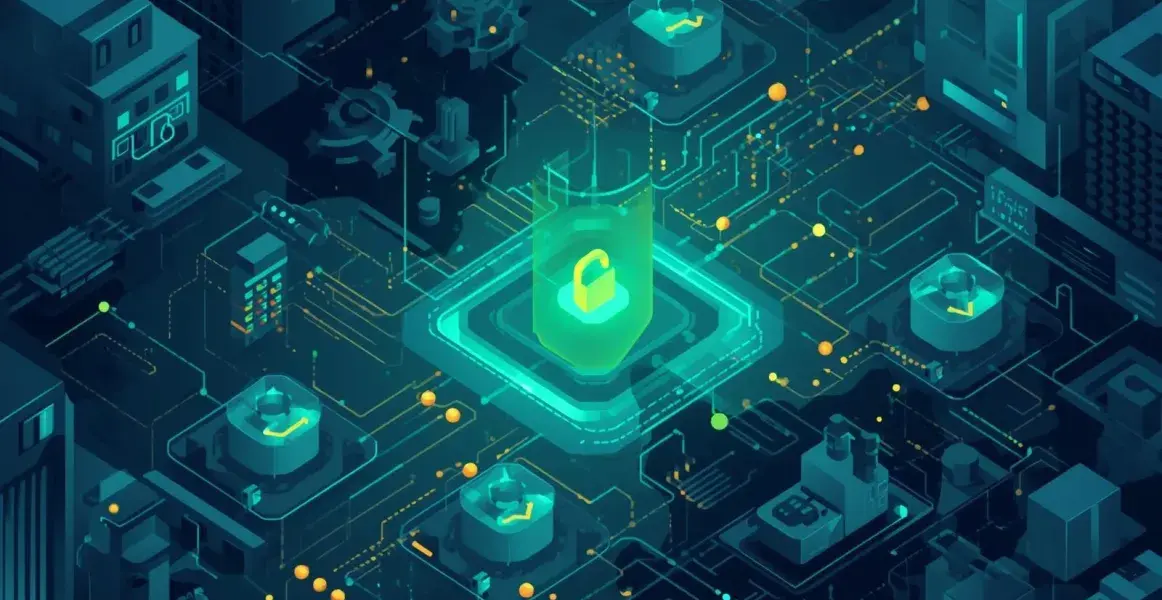
Cyberattacks targeting manufacturing OT (Operational Technology) environments surged by 71%1 in the past year, with 29 active threat groups now focusing specifically on the sector: a clear indicator that the factory floor has become one of the most aggressively targeted attack surfaces in the world.
This is no longer an abstract cyber risk.
A single OT disruption today can halt production, jeopardize safety, disrupt supply chains, and damage customer trust.
A New Risk Landscape on the Factory Floor
It was not too long ago that OT systems lived in very isolated environments. Air gapped networks, proprietary controllers, and closed vendor ecosystems provided a natural buffer against cyber threats. However, that is simply not the reality anymore.
Today’s factories are deeply interconnected. Sensors, PLCs, SCADA systems, IIoT devices, robotics, and cloud connected systems continuously exchange information across IT and OT boundaries.
This convergence of technologies was a key component for efficiency, but it also increased the risk surface exponentially. Threat actors no longer need physical access to the floor. They don’t even need to target OT directly.
All they need is to simply exploit the gaps between siloed IT and OT teams, systems, and workflows.
The question is no longer “Are we at risk?”
It’s “How quickly can we see, escalate, and respond when something happens?”
Where OT Security Breaks Down Today
Even as threats accelerate, most manufacturers still struggle with a few core gaps:
- IT and OT operate in silos
Different priorities, tools, and processes lead to slow, inconsistent responses when incidents span both environments.
- Limited visibility into OT assets
Legacy equipment, vendor specific tools, and manual inventories make it difficult to see what’s connected or vulnerable, in real-time.
- Manual, fragmented response processes
Many OT alerts still move through email threads, spreadsheets, or informal communication, slowing action when speed matters most.
- No unified system of action
Security alerts, engineering logs, and plant operations data live in separate systems with no single workflow connecting them. This leaves dangerous gaps attackers can exploit.
Why OT Security Must Be Treated as a Workflow Problem
When an OT incident occurs, the technical threat is only half the challenge. The true risk lies in coordination.
A PLC anomaly detected by an OT monitoring tool must trigger a chain of cross functional actions:
- IT security must validate and classify the threat
- OT engineering must assess operational impact
- Maintenance must be dispatched for containment or repair
- Plant leadership must be notified
- Compliance must capture an audit trail
- Every delay compounds operational risk.
Industry guidance consistently stresses that modern OT security programs depend on unified governance, cross team workflows, and integrated visibility across IT and OT environments.
This is precisely where a platform such as ServiceNow becomes a force multiplier.
How ServiceNow Strengthens OT Security and Resilience
ServiceNow helps manufacturers close the IT and OT gap by giving every team involved in an OT incident the same information, the same process, and the same place to act.
It begins with visibility.
ServiceNow connects to OT security tools such as Claroty, Nozomi, and Tenable so asset information from the plant floor flows into one consistent system (CMDB). Leaders and security teams gain a clear understanding of what is running, what is exposed, and what requires attention.
From there, ServiceNow turns OT alerts into coordinated response workflows. When an event is detected, IT security, OT engineering, plant operations, and maintenance are all brought into the same process. Everyone sees the incident, the context, and the sequence of actions. Nothing relies on email or tribal knowledge.
ServiceNow also accelerates containment. Security teams can evaluate threats, engineering can validate operational impact, and maintenance can be dispatched directly from the same platform. This eliminates delays that typically occur when each group operates in isolation.
Finally, ServiceNow supports continuous compliance by monitoring policies, identifying control gaps, and recording actions across both IT and OT environments. This creates a single, auditable view of risk and readiness.
In simple terms, ServiceNow transforms OT security from a collection of disconnected activities into a unified, coordinated response that strengthens operational resilience.
The Bottom Line
OT security is now a core operational priority and not just a technical discipline.
As factories become more connected, the only way to protect uptime, safety, and resilience is through a unified workflow platform that brings IT and OT together and turns detection into coordinated action.
ServiceNow provides that backbone.
This was Part 2 of the series.
Next, we will explore Connected Frontline Workers and why empowering the people closest to the work is essential for the next era of manufacturing.


Popular Articles
In the digital age, businesses must adopt an ad
GRC is the capability, or integrated collection
Get the latest insights straight from our desk to your inbox.
Featured Articles
Explore more →
Whitepaper: Ransomware Threat Management
Ransomware continues to be a real threat to business operations across all industries, no organization is safe from this threat.
Laszlo S. Gonc
CISSP, First Senior Fellow, DivIHN Cybersecurity Center of Excellence view
Cybersecurity Incident Response Preparedness
An incident response framework provides a structure to support incident response operations. A framework typically provides guidance on what needs to be done, but not on how it is done.
Laszlo S. Gonc
CISSP, First Senior Fellow, DivIHN Cybersecurity Center of Excellence view
IoT Medical Device Cybersecurity
Healthcare data and medical devices would be aggressively targeted by ransomware attacks since early 2017 has proven to be true